Exhibitions 2026
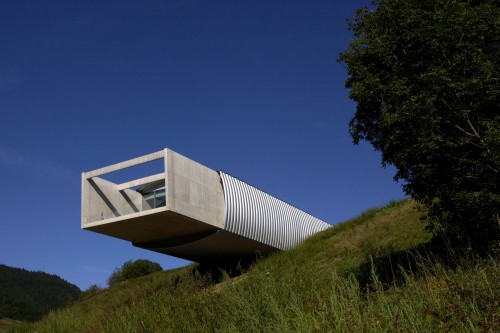
The Museum Liaunig offers far more than impressive architecture and art – it is a vibrant hub for encounters and cultural dialogue in Southern Carinthia.
The 2026 season features a total of eight exhibitions, with a focus on sculpture, plastic art and objects: The centrepiece is the exhibition "(UN)DEFINED. Sculptural Works from the Liaunig Collection", in which curator Alexandra Schantl explores developments in sculpture since 1945.
Two changing special exhibitions complement the programme: In the first, the artist couple Elisabeth Trenkwalder (*1961) and Elmar Trenkwalder (*1959) will, until 19 July, juxtapose monumental ceramic sculptures with large-format paintings. From 1 August, the extensive oeuvre of the concrete artist Hellmut Bruch (*1936) will be on display in a retrospective marking his 90th birthday.
Further highlights include the photographs by Walter Schramm (b. 1941) in the museum’s graphic arts wing and the works of the sculptor Robert Tauber (b. 1936) in the sculpture depot.
There is also a change in the historical collection displays: following stops in Germany and Spain, the African collection "Akan Gold" returns to Neuhaus. As a contrast to the contemporary art, decorated glassware from the Renaissance to the Biedermeier period and rare, previously unseen portrait miniatures are on display.
Hellmut Bruch 90 Years
From the Elementary to the
Open
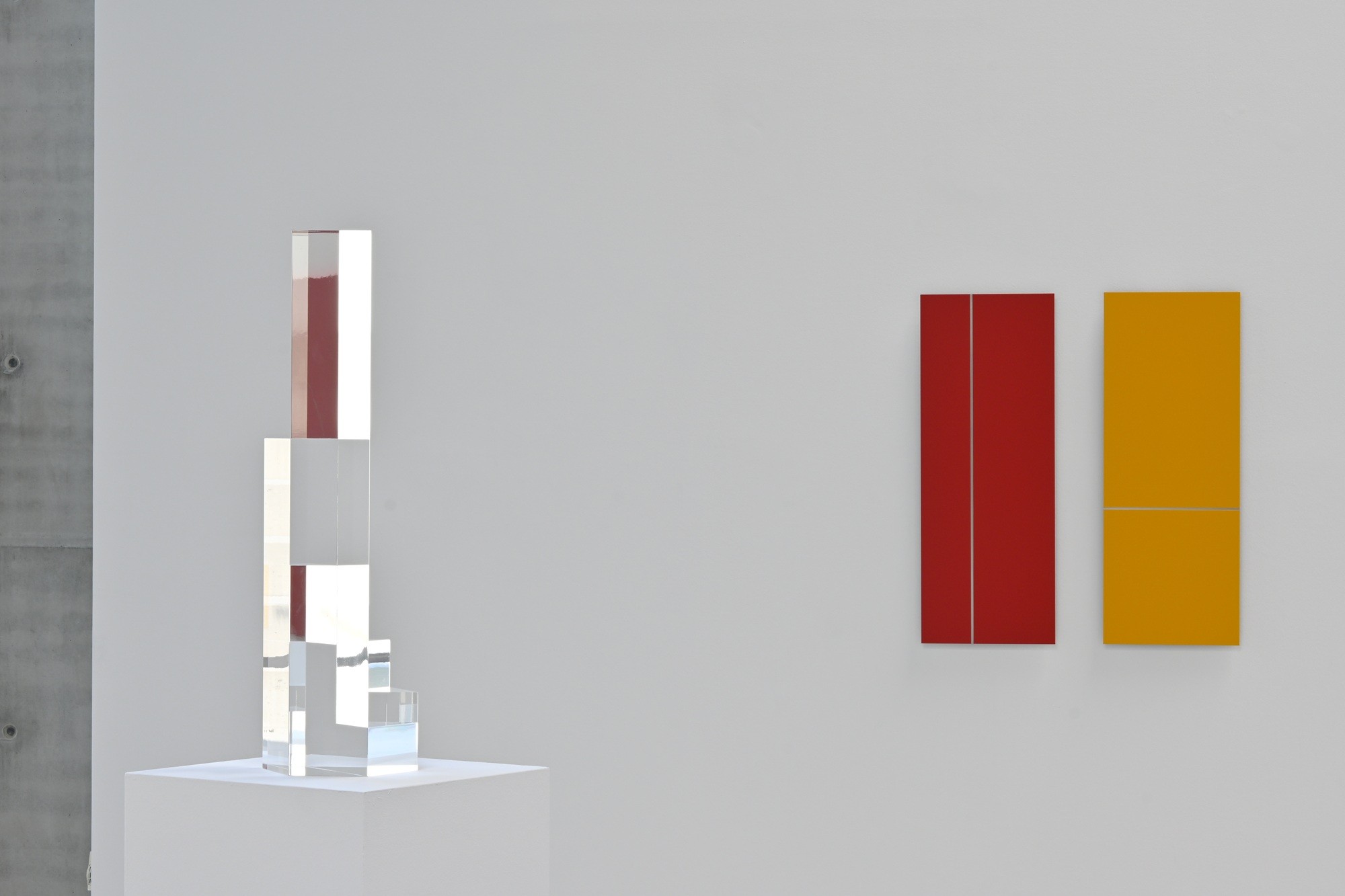
The Museum Liaunig is dedicating a comprehensive retrospective to the Tyrolean artist Hellmut Bruch to mark his 90th birthday. Curator Günther Dankl presents key works from Bruch’s artistic oeuvre – ranging from early pieces made from industrial materials to the characteristic stainless steel and acrylic glass objects of recent decades – and, through this exhibition, pays tribute to one of the most significant figures in concrete-constructivist art in the German-speaking world.
Since the late 1960s, Hellmut Bruch has pursued a consistent artistic path. His body of work is based on two fundamental principles: reduction to the essentials and the openness of form as an invitation to independent thought. Building on these, Bruch has developed a distinctive visual language that combines mathematical order, philosophical reflection and sensory perception.
The exhibition centres on sculptures and three-dimensional works made from stainless steel and acrylic glass – materials whose unique properties Bruch has been utilising for decades to explore his artistic themes. Light, reflection and transparency become central design elements. The artist’s formal language is deliberately minimalist. Lines, circles, squares and rectangles form the basis of a body of work that engages with the principles of proportion, growth and order. Many works follow the structures of the Fibonacci sequence and, building on this, develop open forms that point beyond their material boundaries and draw viewers into a process of active engagement.
The circle plays a special role, with Bruch interpreting it as a symbol of unity, wholeness and infinity. Through the combination of geometric clarity and the immaterial medium of light, works are created that are far more than mere formal constructions. They become spaces for thought and experience, in which perception and insight merge.
A catalogue accompanying the exhibition will be published, featuring an essay by Günther Dankl and numerous illustrations of the works (German, ISBN 978-3-9506075-3-6).
"Hellmut
Bruch 90 years – From the Elementary to the Open"
Curator: Günther Dankl
2 August–31 October
2026
(UN)DEFINED.
Sculptural Works from the Liaunig Collection
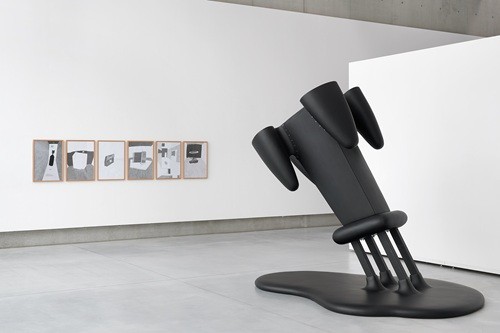
With "(UN)DEFINED. Sculptural Works from the Liaunig Collection", the Museum Liaunig presents a comprehensive exhibition exploring the development and expansion of the concept of sculpture since 1945.
Curator Alexandra Schantl focuses on the question of what sculpture means today, given that the concept has undergone a fundamental transformation since the 1960s. Ever since Marcel Duchamp’s readymades and Rosalind E. Krauss’s theoretical reflections, sculpture has been regarded as an open field that has long since ceased to encompass merely classical three-dimensional objects, but now includes a wide variety of materials, media and forms of expression.
The exhibition approaches this expanded understanding of sculpture from a historical-developmental perspective and presents over 200 works – sculptures, plastic arts, objects, whilst also taking into account the two-dimensional arts, particularly drawing – by around 100 artists.
The exhibition opens with key figures in Austrian sculpture since 1945, including Fritz Wotruba and artists from his circle who engaged intensively with the human figure. This focus is complemented in the northern half of the hall by works that expand upon, question or explore entirely new formal approaches to the figurative. As the exhibition progresses, influential individual positions and innovative approaches enter into dialogue: from body-related works and participatory concepts to sculptural models of thought. The intersections with architecture, performance and photography are also explored, thereby highlighting the complexity of the concept. The southern section of the exhibition focuses more strongly on material and the dissolution of classical genre boundaries. Language is translated into space, textile works open up new perspectives on everyday materials, and paper, wood and industrial materials are transformed in surprising ways. This gives rise to works that oscillate between sculpture, painting and drawing, or deliberatel subvert these categories. In the concluding section, the focus shifts to the immaterial: lines, shadows, reflections and voids redefine the sculptural here and point to its illusionistic and conceptual potential.
The exhibition "(UN)DEFINED" powerfully demonstrates the breadth and openness of an artistic concept that is constantly evolving whilst eluding any clear definition.
The exhibition features works by the following artists: Joannis Avramidis, ONA B (Susanne Kibler), Alfredo Barsuglia, Josef Bauer, Wolfgang Becksteiner, Wander Bertoni, Canan Dagdelen, Willi Dorner, Otto Eder, Lorenz Estermann, Gerda Fassel, Judith Fegerl, Johann Feilacher, Jenny Feldmann, Tone Fink, Judith P. Fischer, Herbert Flois, Andreas Fogarasi, Padhi Frieberger, Heinz Gappmayr, Bruno Gironcoli, Roland Goeschl, Herbert Golser, Dorothee Golz, Birke Gorm, Franz Graf, Helmuth Gsöllpointner, Alfred Haberpointner, Heidi Harsieber, Fritz Hartlauer, Julia Haugeneder, Julie Hayward,
Katharina Heinrich, Rudolf Hoflehner, Gerhard Kaiser, Michael Kienzer, Katharina Kleibel, Cornelius Kolig, Arthur Kostner, Hubert Kostner, Eric Kressnig, Hans Kupelwieser, Maria Lassnig, Marianne Maderna, Manfred Makra, Valerie Messini, Damjan Minovski, Gerhardt Moswitzer, Matt Mullican, Oswald Oberhuber, Franz Xaver Ölzant, Fritz Panzer, Helga Philipp, Franz Pichler, Walter Pichler, Josef Pillhofer, Klaus Pinter, Ingeborg G. Pluhar, Karl Prantl, Hannes Priesch, Claus Prokop, Lisa Rastl, Christiane Reiter, Erwin Reiter, Werner Reiterer, Frenzi Rigling, Meina Schellander, Eva Schlegel, Walter Schmögner, ManfreDu Schu, Fabian Seiz, Zbyněk Sekal, Steinbrener/ Dempf & Huber, Fritz Steinkellner, Oswald Stimm, Erwin Thorn, Jochen Traar, Andreas Urteil, Walter Vopava, Manfred Wakolbinger, Paul Wallach, Uta Weber, Walter Weer, Lois Weinberger, Clemens Weiss, Franz West, Markus Wilfling, Fritz Wotruba, Reimo Wukounig, Erwin Wurm, Regina Zachhalmel, Tilmann Zahn and Leo Zogmayer.
A comprehensive catalogue will be published to accompany the exhibition, featuring texts by Alexandra Schantl and numerous exhibition views as well as reproductions of the works.
"(UN)DEFINED. Sculptural Works from the Liaunig Collection"
Curator: Alexandra Schantl
26 April–31 October 2026
Elmar & Elisabeth Trenkwalder
Paintings and sculptures
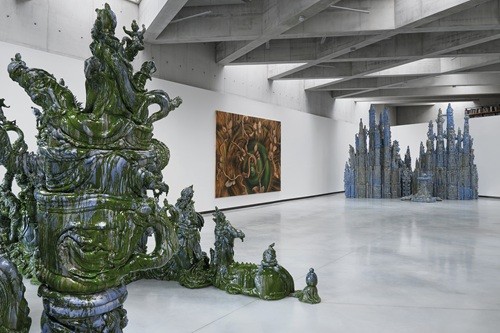
In the triangular special exhibition hall, Elisabeth and Elmar Trenkwalder unfold an impressive artistic universe that straddles the line between reality and imagination. Taking the real world as their starting point, they create works that can be understood as a deliberate transcendence of our reality.
The monumental sculptures by Elmar Trenkwalder (1959) impress with their opulent formal language and a powerful, richly detailed rhythm. Organic and architectural elements intertwine to form dynamic structures which, despite their massiveness, seem to be in constant motion. Symmetry serves as a central organising principle, yet is deliberately broken and transformed into a tension-filled equilibrium. Colour, light and space play a significant role in the appearance of the works, allowing them to be experienced anew from every perspective.
Ornament also plays a central role in the paintings of Elisabeth Trenkwalder (1961). In complex, often symmetrically arranged pictorial compositions, observations of nature, memories and inner images coalesce into multi-layered spaces that frequently evoke the grandeur of a cathedral. Her finely tuned colour palette creates both delicate transitions and powerful contrasts, opening up visual worlds that oscillate between organic grounding and dreamlike detachment.
Both artists share an artistic approach that oscillates between intuition and structure, control and openness. Their works draw on archetypal imagery and transform it into a distinctive, contemporary visual language. This creates a tension between order and ecstasy, leading the viewer into sensually dense, ambiguous
spaces of experience.
The exhibition brings to life the extraordinary intensity and originality of their work – as a powerful counterpoint to an increasingly rationalised everyday world and as an invitation to gain new perspectives on perception, physicality and beauty.
A catalogue accompanying the exhibition features texts by Herta Pümpel and Benoît Blanchard, as well as numerous images.
"Elmar & Elisabeth Trenkwalder – Paintings and sculptures"
26 April–19 July 2026
Robert Tauber
Attributed to the space
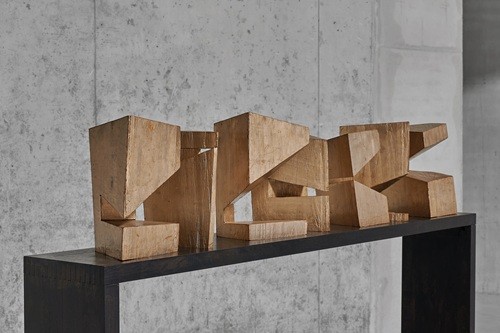
The exhibition at the Skulpturendepot, curated by Alexandra Grimmer, is dedicated to the sculptural work of Robert Tauber, an artist born in 1936 in St. Leonhard near Freistadt (Upper Austria). On display are 29 sculptures and a relief from the years 1962 to 1983 – a concentrated insight into an extensive body of work comprising around 200 pieces.
Robert Tauber, who trained at the Academy of Fine Arts in Vienna under Josef Pillhofer, developed his own distinctive formal language at an early stage. The starting point for his work is the figure, which he never isolates, but always conceives in relation to the surrounding space.
His sculptures are not static forms, but define themselves in dialogue with their surroundings. A characteristic feature of Tauber’s work is his direct engagement with the material. Without preparatory drawings, his sculptures emerge directly from wood or stone. Wood, in particular, becomes the central medium, whose surface he treats in multiple layers through staining, polishing, gilding and the use of resins. Over time, the works develop an individual patina, a process that Tauber consciously incorporates into his artistic practice.
The exhibition in the sculpture depot brings works from different creative phases into an open dialogue. Some works stand alone, whilst others form groups and thematic connections. At the centre of the room, the sculpture “Natterzwerg” (1966) acts as a unifying element, engaging with the surrounding works.
Departing from a chronological order, the sculptures encounter one another as independent positions. Together, they illustrate Tauber’s ongoing engagement with form, material and space. The exhibition reveals how a multi-layered sculptural thinking unfolds from the figure, a thinking that was consistently developed over decades.
A richly illustrated catalogue with texts by Alexandra Grimmer and Peter Paszkiewicz is published to accompany the exhibition.
In cooperation with BMCA Blue Mountain Contemporary Art
"Robert Tauber – Attributed to the space"
Curator: Alexandra Grimmer
26 April–31 October 2026

Art in Dialogue
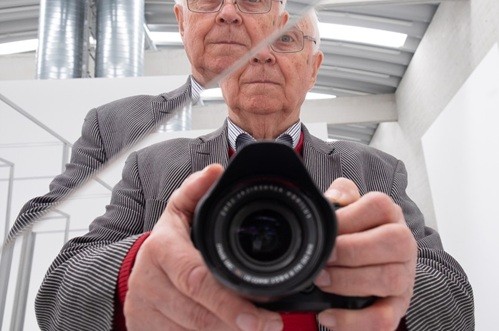
Walter Schramm Photographs
Walter Schramm’s photographs, first published in a comprehensive photo book in 2018, will be on display in the Graphic Arts Wing during the 2026 season. The exhibition brings together a selection from his photographic oeuvre, created over several decades, which captures the vibrant atmosphere of the Austrian art scene in general and the Museum Liaunig in particular through striking snapshots.
Since the museum opened in 2008, Walter Schramm has documented exhibition openings, events and encounters with a keen eye. His photographs oscillate between reportage, portraiture and situational observation, without ever appearing staged. Rather, they depict people in authentic moments: in conversation, in exchange, and experiencing art.
Schramm’s photographs are characterised by a particular immediacy. They are spontaneous ‘snapshots’ that capture atmosphere, dynamism and social interaction – marked by a keen sense of the right moment. The result is a multi-layered portrait of the art scene, encompassing artists as well as collectors, art lovers and visitors.
The exhibition offers a glimpse behind the scenes of museum operations and allows visitors to experience the unique atmosphere of exhibition openings. It invites visitors to immerse themselves in a visual chronicle that is less a documentation than a distillation – thus revealing the encounter between art and people in all its facets.
The publication "Art in Dialogue – Walter Schramm – Photographs 2008–2017 · Museum Liaunig", with a foreword by Peter Baum, has been published by Bibliothek der Provinz.
"Art in Dialogue – Walter Schramm Photographs"
26 April–31 October 2026